
Alpharmaca Inc. has long been dedicated to the field of nanoscience and nanotechnology, providing comprehensive solutions for nanomaterial production, particle characterization, application development, and analytical optimization.
ABOUT Alpharmaca
Over 15 years of experience in integrated particle size solutions

Product Center
Measures the size and zeta potential of sub-micron particles
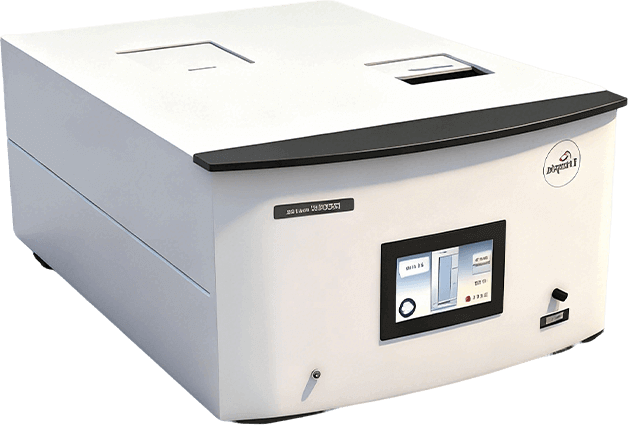
Nicomp Z3000

Particle Characterization - Nicomp® Nano DLS/ZLS Systems -
Nicomp Z3000

Combines Dynamic Light Scattering (DLS) sizing capability with both frequency and Phase Analysis Light Scattering (PALS) modes for measuring zeta potential

With an elect electric field that can be varied from 1 to 250 Volts/cm, one instrument can be used to analyze zeta potential in aqueous and organic solvents

Cost of ownership is minimized with easy-to-use dip cell and inexpensive ZRS zeta potential standard
Over 15 years of experience in integrated particle
size solutions

Wuhan Office
Facilities: Office, Laboratory
Demo Systems: Analysers; Standards.
Shanghai Office
Facilities: Office, Laboratory, Warehouse
Demo Systems: Production equipment,
Analysers; Standards.
Particle Science
Particle Science - Rayleigh scattering
In 1869, while attempting to determine whether any contaminants remained in the purified air he used for infrared experiments, John Tyndall discovered that bright light scattering off nanoscopic particulates was faintly blue-tinted.[3] He conjectured that a similar scattering of sunlight gave the sky its blue hue, but he could not explain the preference for blue light, nor could atmospheric dust explain the intensity of the sky's color.
Rayleigh scattering causes the blue
color of the daytime sky and the
reddening of the Sun at
color of the daytime sky and the
reddening of the Sun at
News
See All News & Stories

Red and orange colors are more visible during
sunset because the blue and violet

Lord Rayleigh (John Strutt) refined his 1theory of
scattering in a series of papers.

Young, Andrew T (1981). "Rayleigh scattering". Ap
plied Optics. 20 (4): 533–5.